Home › Services
Asphalt Repair
Reading the defect correctly is most of the job. Filling it is the easy part.
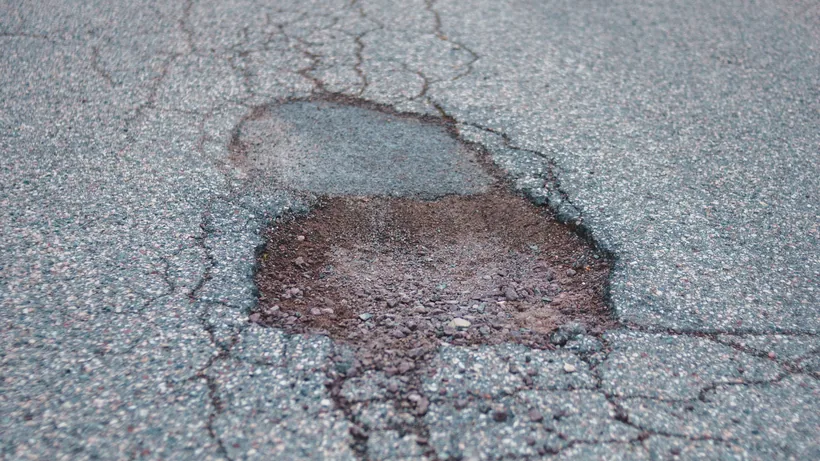
Every defect is telling you something
Asphalt fails in a small number of recognizable patterns, and each one points at a different cause. Learning to tell them apart is what separates a repair that holds from a repair that is back on the schedule next year.
The single most useful distinction is direction of travel. Damage that begins in the wearing course and works downward can be addressed from above, and treatments applied there earn their keep. Damage that begins in the layers beneath and works upward cannot be reached from above at all, whatever is applied.
Owners lose a great deal of money to that distinction, usually in the form of sealing or overlaying a lot whose base is failing. The work is done properly, the lot looks better for a season, and it fails on exactly the schedule it was already on.
So the first question on any repair is never how to fix it. It is what caused it, and whether what caused it is still happening.
Alligator cracking
Interconnected cracking in a pattern like reptile skin, almost always in wheel paths, at entrances, or where heavy vehicles turn. This is the clearest base failure signal in the trade.
What it means is that the pavement is flexing under load because the material underneath has lost the ability to support it, and the asphalt is breaking up as a result. The cause is under the surface, not on it.
It cannot be sealed. It cannot be overlaid with any expectation that the pattern will not come back through. The area has to be removed, the base repaired or replaced, and new asphalt placed to the specification the loading actually requires.
That is why a relatively small alligatored area costs more to fix properly than a large area of surface work, and why a bid that proposes sealing it is either not reading it correctly or is selling something cheaper than what is needed.
Potholes
A pothole is usually alligator cracking that has progressed until pieces have come out, accelerated by water getting into the base and, in this climate, by that water freezing.
The useful question is never how to fill it. It is why it appeared where it did and not two feet to the left.
Potholes that recur in the same location after being filled are telling you that either the base has failed there or water is getting in and not getting out. Refilling them is a recurring charge rather than a repair.
There is a legitimate place for a temporary fill — a hazard in the middle of winter has to be dealt with when it appears, not in April. What matters is being honest that it is temporary, and scheduling the real repair for the season.
Longitudinal and transverse cracking
Single cracks running with or across the direction of travel are frequently surface-level in origin: thermal movement, oxidation of the binder, or joints from the original paving opening up.
These are genuinely worth sealing, and along the Front Range sealing them promptly is one of the highest-return things on a maintenance schedule. An open crack is a route for water into the base, and in a climate with this many freeze-thaw cycles that route gets wider every winter.
Where transverse cracks appear at regular intervals across a lot, they are frequently reflecting joints or cracks in an older pavement underneath an overlay, which is a different situation and one that sealing manages rather than solves.
Rutting, shoving and depressions
Depressions running along wheel paths, or material pushed up into ridges where vehicles brake and turn, indicate that the pavement is deforming rather than cracking.
Causes divide into two. Either the mix and thickness are not adequate for the loads being applied, which shows up where heavy vehicles maneuver, or the base and subgrade are consolidating under load, which shows up as broader depressions.
Ruts also collect water, which then works on the base and accelerates everything else. A rut is therefore both a symptom and a new cause, which is why they tend to get worse at an increasing rate.
Where this appears at a dumpster pad, a delivery entrance or a drive-through window, the loading is the story and the repair has to change the specification rather than replace like for like.
A pale, gritty surface shedding stone
Sunlight breaks down the binder that holds the aggregate in place, and the surface turns from black to gray as it goes. Past a point the stone itself starts working loose, the texture turns coarse underfoot, and sweeping the lot produces a pile of what used to be the lot.
At Front Range elevation this runs faster than most owners expect, and it is the one failure mode that surface treatment is genuinely designed to slow. A sound but oxidizing surface is the case where sealcoating does exactly what it claims to do.
Advanced raveling is past that point. Where the surface has lost significant aggregate and is rough throughout, the answer is resurfacing rather than a coating over a deteriorated surface.
Full-depth patching, and why it costs what it costs
A full-depth patch means removing the failed pavement through its full thickness, dealing with the base underneath, and rebuilding the structure in that area.
That is the repair that changes the outcome. A surface patch over a failed base is a cosmetic operation with a known failure date. The cost difference between the two is real, and so is the difference in how long they last.
Done properly, a full-depth patch involves cutting clean vertical edges into sound pavement rather than feathering into broken material, removing everything that has failed, assessing and correcting the base, applying tack to the vertical faces so the patch bonds to the existing pavement, and compacting the new material properly in appropriate lifts.
The edges are where patches fail, and the reason is almost always that they were not cut square into sound material or the vertical faces were not tacked. A patch that is delaminating around its perimeter after one winter was built that way.
Failed patches tell you about the contractor
A lot with multiple failed patches is a lot that has been repaired repeatedly without the cause ever being addressed, and that pattern is worth naming when it appears.
The most common version is a sequence of surface patches over a base that has been failing the whole time. Each one held for a season or two. Collectively they cost more than the correct repair would have, and the underlying area is now larger than it was at the start.
The other common version is patches that were the right idea and were built badly: feathered edges, no tack, poor compaction, or material placed in conditions where it could not compact. These fail at the perimeter and are easy to recognize.
On a property with a repair history like that, the useful step is an assessment that covers the whole lot rather than another round of individual repairs — because the question is no longer what to do about each patch, it is what is happening underneath them.
A sensible order of operations
- Establish what is causing each defect, distinguishing surface from base.
- Map where water stands after rain or snowmelt, because that is where the next failures will appear.
- Correct the drainage where it can be corrected.
- Rebuild the structurally failed areas full depth, to the specification the loading requires.
- Seal the cracks that are worth sealing, before winter rather than after it.
- Resurface or treat the surface only once the structure underneath is sound.
- Restripe last, on a finished surface.
Asphalt Repair — common questions
Why does the same pothole keep coming back?
Because the cause is still there. Either the base under it has failed or water is getting in and not getting out, and filling the hole addresses neither. Repeated filling in the same spot is a subscription rather than a repair.
Can alligator cracking be sealed?
No, and sealing it is one of the more expensive mistakes in the trade because it feels like maintenance. Interconnected cracking in wheel paths means the material under the pavement has lost the ability to support the load. That has to be rebuilt.
What is the difference between a surface patch and a full-depth patch?
A surface patch replaces the top of the pavement. A full-depth patch removes everything that failed, deals with the base underneath and rebuilds the structure. Over a failed base, only the second one changes the outcome.
Why do our patches fail around the edges?
Almost always because the edges were feathered into broken material rather than cut square into sound pavement, or because the vertical faces were not tacked so the patch never keyed into the existing pavement. Both are workmanship, and both show up within a winter or two.
Is a temporary winter fill ever the right answer?
Yes. A hazard that opens up in January has to be dealt with in January. What matters is being clear that it is temporary and scheduling the real repair into the season rather than letting the fill become the plan.
How urgent is crack sealing here?
More urgent than in milder climates. Every open crack is a route for water into the base, and this region runs a lot of freeze-thaw cycles. Sealing before winter rather than after it is one of the highest-return items on any Front Range maintenance schedule.
Our lot is rutted near the loading area. What now?
That is a loading problem rather than a general condition, so replacing like for like repeats it. The repair needs to change the specification for that area, and in some cases the right answer for a dock apron or dumpster pad is concrete rather than asphalt.
How do we know whether it is a base problem?
The pattern usually tells you: interconnected cracking in wheel paths, potholes recurring in the same spot, broad depressions, and failures concentrated where heavy vehicles work. Where it is genuinely unclear, a core or a test pit answers it definitively and is cheaper than guessing.
Should we repair now or wait and do the whole lot?
It depends on how much of the lot is structurally failed. Where failure is localized, targeted full-depth repair plus crack sealing is the efficient answer. Where it is widespread, repeated repair costs more than reconstruction and buys less, and an honest assessment should say so.
Does repair work have to wait for warm weather?
Permanent hot-mix repairs are temperature-dependent and largely belong in the season. That is an argument for getting assessment and budget done over the winter so the work is booked early rather than competing for the tail end of the window.
Talk through your site
Give us the address, an approximate area, and pictures of the worst ground plus any water still lying after rain or snowmelt.
Related work
Parking Lot Paving
New lots and full reconstruction, built from the subgrade up for freeze-thaw ground.
Line Striping & ADA Layout
Layout, stall counts, accessible parking, and paint that survives a plow season.
Sealcoating & Crack Sealing
What they do, what they do not, and why crack sealing matters more at altitude.
Resurfacing & Overlay
Laid over or milled in, and how to tell a worn surface from a failed structure.
Asphalt Driveways
Repair, resurfacing and sealcoating of existing asphalt drives.
Where we do it
Denver
Industrial, distribution and dense urban lots.
Broomfield
Business parks, HOA streets and newer commercial ground.
Westminster
Older retail, dense multifamily and a lot of deferred maintenance.
Arvada
Mature lots, clay soils and long maintenance backlogs.
Thornton
Fast-built commercial ground and heavy delivery traffic.
Boulder
Constrained sites, high standards and hard phasing.